

Screen Printing vs Heat Transfer Shirts: 2026 Comparison
Table of Contents
- How Screen Printing Works
- How Heat Transfer and Heat Press Printing Works
- Screen Printing vs Heat Press: Key Differences
- Print Quality and Appearance
- Heat Transfer Shirts Durability and Wash Resistance
- Screen Printing Cost Per Shirt by Order Size
- Best Printing Method for Custom Shirts: Decision Framework
- Conclusion
- Frequently Asked Questions
Last Updated: October 11, 2026
How Screen Printing Works
Screen printing forces plastisol ink through a fine mesh screen onto fabric using a squeegee. A stencil blocks areas where ink shouldn't pass, allowing ink to flood through open mesh onto the garment.
Each color requires a separate screen, making screen printing ideal for high-volume production where per-shirt costs drop significantly after setup investment.
Heat-cured ink bonds permanently to fabric fibers, creating a durable, vibrant print resistant to fading and cracking. The tactile feel is integrated into the fabric.
At The Goods ND, professional equipment and quality control inspections ensure consistent ink coverage and color alignment on every print.
How Heat Transfer and Heat Press Printing Works
Heat transfer printing prints your design onto special transfer paper, then a heat press applies precise temperature and pressure to transfer the image to the garment.
Heat transfer vinyl, pre-printed colored vinyl cut to shape and heat-pressed onto the shirt, works on virtually any fabric, including polyester and dark-colored garments.
Heat transfer setup takes minutes versus hours for screen printing, and you can print one or 100 shirts without workflow changes. Image quality is crisp because you're transferring an already-printed design.
The tradeoff is durability: heat transfer prints can crack or peel after 20-30 washes, feel stiffer than screen printing, and may show backing on light-colored fabrics.
Heat transfer suits small orders, one-off designs, fast turnaround, challenging fabrics, and photographic image quality.
Screen Printing vs Heat Press: Key Differences
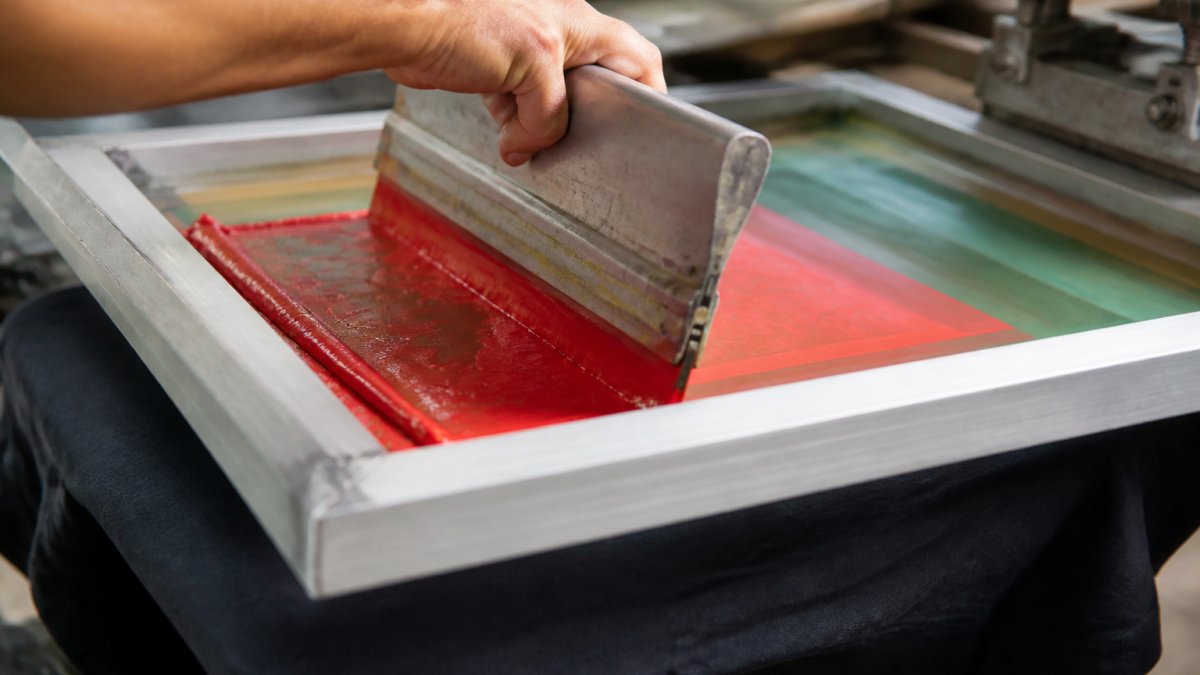
Screen printing requires significant upfront investment but costs less per shirt at scale; heat transfer requires minimal setup but costs more per unit.
Here's how they compare across the factors that actually matter when choosing:
| Factor | Screen Printing | Heat Transfer |
|---|---|---|
| Setup time | 2-4 hours per color | 15-30 minutes |
| Per-shirt cost (100 shirts) | Lower at scale | Higher per unit |
| Per-shirt cost (5 shirts) | Higher due to setup | Lower for small orders |
| Design colors | Separate screen per color | Unlimited in one transfer |
| Durability (washes) | 50+ washes typical | 20-30 washes typical |
| Fabric compatibility | Cotton, cotton blends best | Works on most fabrics |
| Image detail | Good for bold designs | Excellent for photos |
| Hand feel | Soft, integrated into fabric | Stiffer, plasticky |
| Dark shirt printing | Requires base layer | Works directly |
| Production speed | Slower per shirt | Faster per shirt |
Screen printing's advantage grows with volume; break-even typically occurs around 50-100 shirts depending on design complexity.
Heat transfer wins on versatility: it works on polyester, dark garments, and specialty fabrics without modification, whereas screen printing on dark shirts requires a white base layer.
Print Quality and Appearance
Screen printing produces vibrant, crisp images that integrate into the fabric. Ink sits within fibers rather than on top, creating bold, consistent colors across production runs.
Multi-color designs stack naturally with precise registration because each screen is positioned identically.
Heat transfer delivers exceptional detail for photographic designs and complex gradients without color separation or screen setup.
Heat transfer images sit on the fabric surface and can peel or crack with washing and stretching.
Screen printing's durability comes from chemical bonding to fibers, making prints resistant to fading, cracking, and peeling through dozens of washes.
Heat Transfer Shirts Durability and Wash Resistance
Heat transfer durability depends on application quality, fabric choice, and post-wash care.
How Heat Transfer Fails: Common Failure Modes
Heat transfer prints fail through peeling (adhesive separates at edges from insufficient temperature or pressure), cracking (stress points in stretched areas), or fading (from sunlight and hot water).
Application Quality: The Biggest Durability Factor
Properly applied transfers survive 30-50 washes; poorly applied ones fail after 5-10 washes. Success depends on correct temperature (300-330°F), consistent even pressure (1-2 tons), and proper dwell time (10-15 seconds). Professional equipment with digital controls ensures consistency better than manual presses.
Fabric Type Dramatically Affects Durability
100% cotton accepts transfers well (30-40 washes); cotton-polyester blends last 25-35 washes; 100% polyester is problematic due to low melting point and smooth surface (15-25 washes, or 25-35 with specialty low-temperature transfers). Specialty performance fabrics typically last 15-25 washes; screen printing is better for frequently-washed athletic apparel.
Dye Migration: A Hidden Durability Issue
Dye migration, where fabric dyes leach into transfer adhesive, occurs on dark polyester or low-quality blends, degrading appearance. It's difficult to prevent without pre-treatment or specialty transfers.
Post-Wash Care Extends Durability
How you wash printed shirts matters:
- Water Temperature: Washing in cold water (below 85°F) extends transfer life by 10-20%. Hot water softens the adhesive and accelerates peeling.
- Wash Cycle: Gentle or delicate cycles reduce mechanical stress on the transfer. Heavy-duty cycles with high agitation accelerate cracking and peeling.
- Drying Method: Air drying is gentler than machine drying. High-heat dryers (above 160°F) soften the adhesive and can cause peeling. If using a dryer, use low heat.
- Ironing: Direct ironing over a heat transfer will damage or peel it. If ironing is necessary, iron the reverse side or use a protective cloth.
Screen Printing Durability Comparison
Screen printing typically survives 50+ washes without significant degradation. The ink bonds chemically to the fabric fibers during curing, becoming part of the garment rather than sitting on top of it. Screen-printed shirts can withstand hot water, aggressive washing, and machine drying without peeling or cracking.
Customizable T-Shirt, Gildan Soft Style - Add your own design! →
For apparel that will be washed weekly or worn in high-stress environments (work uniforms, athletic gear, children's clothing), screen printing's durability advantage is substantial and worth the higher upfront cost.
Screen Printing Cost Per Shirt by Order Size
Screen printing costs break down into two distinct components: upfront setup and per-unit production. Understanding both is essential to determine whether screen printing or heat transfer makes financial sense for your order.
Setup Costs
Setup includes screen creation, ink mixing, color separation, and registration (alignment). For a single-color design, expect $40-$75 per color.
Per-Shirt Production Costs
Once screens are ready, the per-shirt cost drops significantly. For a standard single-color design on 100% cotton or cotton-blend shirts:
- 50 shirts: $5-$8 per shirt (setup amortized across fewer units)
- 100 shirts: $3-$5 per shirt
- 250 shirts: $2-$3.50 per shirt
- 500+ shirts: $1.50-$2.50 per shirt
These figures include ink, labor, and overhead but not blank garment cost. The per-shirt price drops because setup is fixed; each additional shirt only adds material and labor.
Break-Even Analysis: Screen Printing vs. Heat Transfer
Heat transfer has minimal setup (typically under $20) but higher per-unit costs. A typical heat transfer print costs $2-$4 per shirt depending on transfer material quality and labor.
For a single-color design:
- 25 shirts: Heat transfer wins (~$50-$100 total vs. $150-$300 for screen printing)
- 50 shirts: Break-even zone; calculate both methods
- 100 shirts: Screen printing wins (~$350-$500 total vs. $200-$400 for heat transfer, but screen printing's durability advantage justifies the cost)
- 250 shirts: Screen printing significantly cheaper (~$500-$875 vs. $500-$1,000 for heat transfer)
For a three-color design, screen printing's break-even point shifts higher (closer to 75-100 shirts) because setup costs triple.
Variables That Affect Your Final Cost
Blank garment cost is separate from printing. Premium blanks (Bella Canvas, Comfort Colors) cost $3-$6 per shirt; budget options cost $1.50-$3. Your total per-shirt cost includes both the blank and the printing method.
Fabric type influences printing cost. Specialty materials (performance polyester, flame-resistant cotton) may require additional setup or handling, adding $0.50-$1.50 per shirt.
Design revisions after screens are created cost extra. Screen printing requires re-screening if you change colors or artwork significantly, whereas heat transfer allows design changes at no additional setup cost.
Why Bulk Orders Favor Screen Printing
At 500+ shirts, screen printing's per-unit cost becomes 50-70% cheaper than heat transfer. This is why large corporate orders, event merchandise, and uniform programs almost always use screen printing.
Best Printing Method for Custom Shirts: Decision Framework
Understanding screen printing vs heat transfer comes down to five key questions:
1. How many shirts do you need? Fewer than 25 shirts: Heat transfer is usually cheaper and faster. More than 50 shirts: Screen printing becomes the better value.
2. What's your deadline? Two weeks or less: Heat transfer. Heat transfer can be done in days. Screen printing requires time for screen creation and curing. Two months or more: Screen printing. The quality and durability advantages justify the longer timeline.
3. What's your design complexity? Photographic image or unlimited colors: Heat transfer. Screen printing is limited by the number of screens you're willing to create. Bold, simple design with 1-3 colors: Screen printing. The durability and hand feel are superior.
4. What fabric are you using? Polyester, dark-colored shirts, or specialty materials: Heat transfer. Screen printing on these requires extra steps and costs. 100% cotton or cotton-blend: Either method works. Screen printing is more durable if you're not concerned about hand feel.
5. How long should the print last? One season or occasional wear: Heat transfer is fine. Frequent washing or heavy use: Screen printing. The durability difference is significant.
At The Goods ND, we handle both methods and can recommend the best approach for your specific order. We've worked with small church groups needing 30 shirts for a single event and construction crews ordering 200+ pieces of flame-resistant work gear. Our quality control process ensures that whether you choose screen printing or heat transfer, your order meets your expectations.
Conclusion
When comparing screen printing vs heat transfer, each method serves different needs. Screen printing wins on durability, cost-per-shirt at scale, and hand feel. Heat transfer wins on speed, versatility across fabrics, and detail in photographic designs. Your choice depends on order size, deadline, and how long the apparel needs to last.
When you're ready to bring your design to life, The Goods ND offers professional screen printing, heat transfer, and multiple other printing methods to match your specific needs. We provide fast turnaround times, thorough quality control checks, and competitive pricing on both small custom orders and bulk runs. Shop now to get started with custom apparel that reflects your vision.

Frequently Asked Questions
Which lasts longer on shirts: screen printing or heat transfer?
Screen printing typically outlasts heat transfer. Screen-printed designs bond directly with fabric fibers through plastisol ink, maintaining color and integrity through dozens of washes. Heat transfer designs can crack, peel, or fade after 20-30 washes, especially with lower-quality transfers or frequent washing. For apparel you plan to wear regularly for years, screen printing delivers superior durability and wash resistance.
Is screen printing or heat transfer cheaper for small orders?
Heat transfer is cheaper for small orders of 1-10 shirts because it has minimal setup costs. Screen printing requires creating screens, which costs $30-50 per color, making it uneconomical for tiny quantities. However, once you reach 25-50 shirts, screen printing's per-shirt cost drops significantly and becomes more affordable overall. For bulk orders of 100+ pieces, screen printing offers the best value per garment.
Can heat transfers reproduce full-color designs on shirts?
Yes, heat transfer vinyl and heat transfer paper can reproduce full-color designs, including photographic images. Heat transfer vinyl works best for solid colors and simple graphics, while heat transfer paper handles full-color photos and complex artwork. However, the color vibrancy and fine detail depend on the transfer quality and the shirt fabric. Screen printing with multiple ink colors produces more vivid, detailed results for complex multi-color designs.
What are the downsides of heat transfer vinyl?
Heat transfer vinyl can crack or peel with repeated washing and flexing, especially in high-movement areas like across the chest. It creates a plastic-like hand feel on the garment, which some wearers find uncomfortable. Vinyl also struggles with fine detail and small text, and it's difficult to apply perfectly without wrinkles or air bubbles. For designs requiring durability and a soft, natural feel, screen printing is a better choice.