

Lightweight CAT 2 FR Shirts for Outdoor Crews Who Work Hot
Last Updated: November 11, 2026
Quick Summary
Lightweight CAT 2 FR shirts deliver arc-rated protection with less heat load, so outdoor crews stay comfortable in direct sun. Choose a 7 oz fabric rated ATPV 11 to 12 cal/cm², and order one size up if your crew layers or uses industrial laundry.
- CAT 2 covers arc ratings between 8 and 25 cal/cm²; below that is CAT 1.
- A 7 oz FR shirt moves heat and moisture out faster than a 9 oz shirt.
- The 88/12 cotton-nylon CAT 2 shirt carries ATPV 12 and resists abrasion better than cotton.
- Wash FR separately from non-FR laundry and never use bleach or softener.
- Retire any shirt with grease or chemical saturation that will not wash out.
Table of Contents
- Why Lightweight CAT 2 FR Shirts Matter for Outdoor Crews
- Understanding CAT 2 Protection Levels and NFPA 2112 Compliance
- Fabric Weight, Breathability, and Moisture-Wicking in Summer Heat
- OSHA Requirements for Flame Resistant Clothing on Job Sites
- Choosing the Right FR Fabric Blend for Your Crew
- Custom FR Apparel Printing Without Compromising Safety Ratings
- How to Care for CAT 2 FR Gear So It Keeps Its Rating
- Layering and Skin Comfort: What Most FR Guides Skip
- Frequently Asked Questions
Why Lightweight CAT 2 FR Shirts Matter for Outdoor Crews
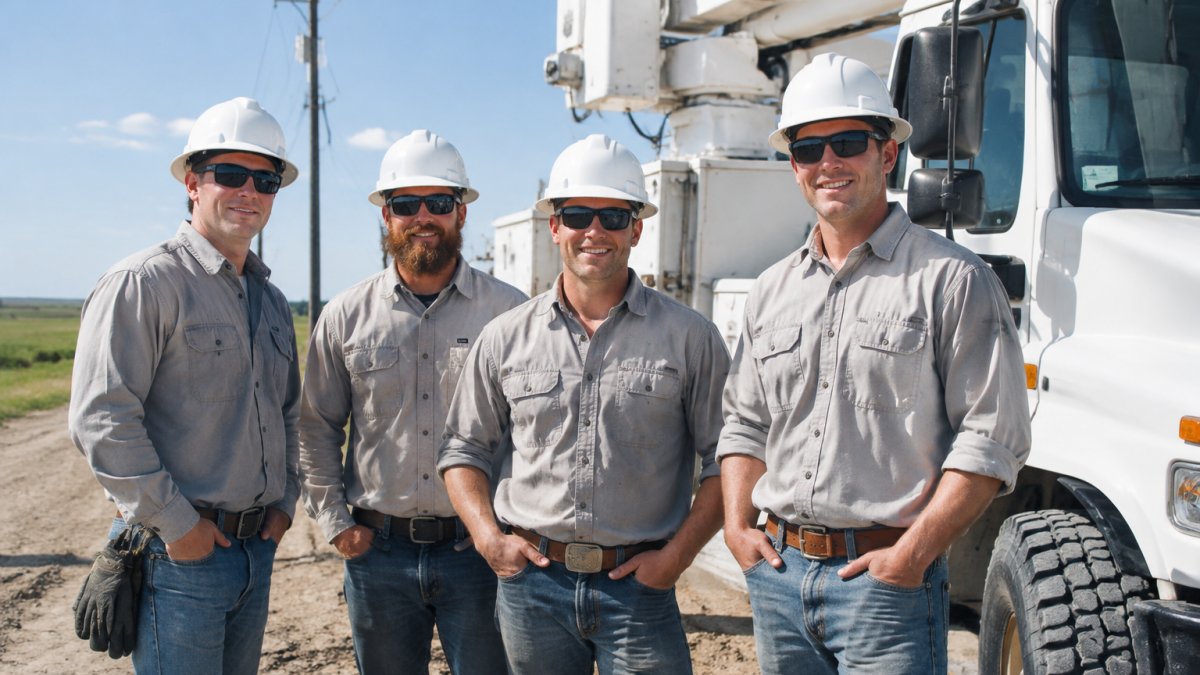
Lightweight CAT 2 FR shirts solve a specific problem: they deliver arc-rated protection without the heat load that turns a summer shift into a hazard of its own. This guide covers how to pick them for crews working in direct sun.
Here's the tension most buyers miss. Heavier flame-resistant fabric offers more thermal protection, but it also traps more body heat. For a lineman on a pole in July, heat stress can be the more immediate risk. A lighter garment rated to the same protection level can be more comfortable over a long shift than a heavier one. The protection is the same. The comfort is not.
Below, we'll break down how CAT 2 ratings work, which fabric blends hold up, and how to keep the rating intact after fifty washes.
Understanding CAT 2 Protection Levels and NFPA 2112 Compliance
CAT 2 is a hazard risk category, not a fabric type. It describes how much thermal energy a garment can withstand before the wearer sustains a second-degree burn.
The rating is tied to NFPA 2112, the standard for flame-resistant clothing for industrial personnel, alongside ASTM F1506 for arc-rated garments. A shirt earns CAT 2 when its arc rating falls between 8 and 25 cal/cm². Below that, it's CAT 1. Above it, CAT 3 or 4.
What ATPV Ratings Actually Tell You
ATPV stands for Arc Thermal Performance Value, measured in cal/cm². It's the incident energy level at which there's a 50% probability of the onset of a second-degree burn. A shirt rated ATPV 11 sits comfortably inside CAT 2.
What most guides miss: ATPV is a threshold, not a comfort score. Two shirts can both carry ATPV 11 and feel completely different in August. That's why the fabric weight and weave matter as much as the number on the label.
Fabric Weight, Breathability, and Moisture-Wicking in Summer Heat
Fabric weight drives breathability more than any single spec. A 7 oz FR shirt moves heat and moisture out faster than a 9 oz shirt of identical construction, and for outdoor crews that difference compounds across a shift.
Moisture-wicking matters because wet fabric against skin conducts heat poorly and chafes. Mercerized cotton, which resists shrinkage while staying soft, is a fabric worth looking for. The lightweight 7 oz 100% cotton CAT 2 shirt is a concrete example: mercerized cotton twill, pearl snaps, and action back pleats for reaching overhead without the shirt riding up.
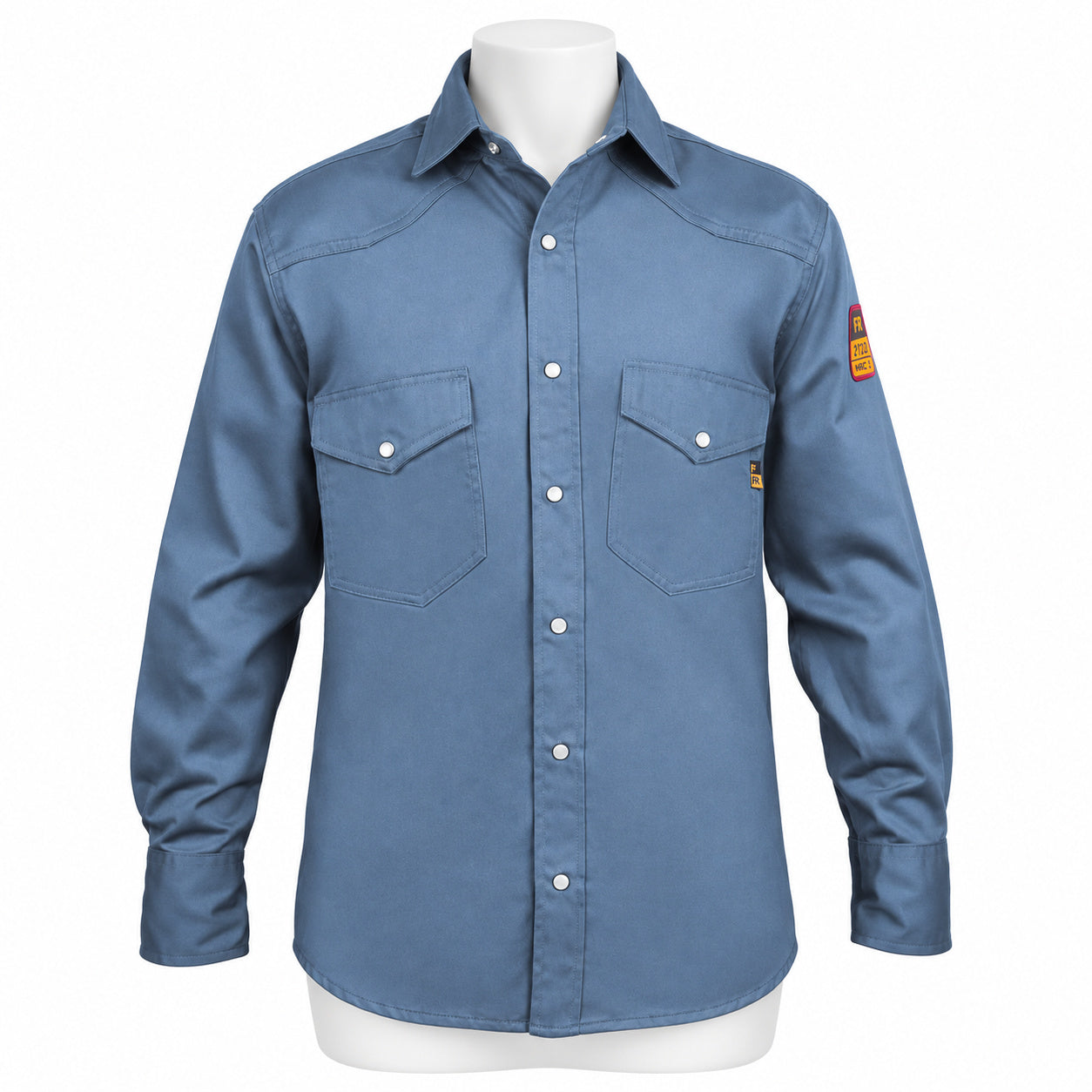
Watch out: a shirt that fits snug in the chest will trap heat no matter how light the fabric. If your crew layers or sends gear through industrial laundry, order one size up.
OSHA Requirements for Flame Resistant Clothing on Job Sites
OSHA does not certify FR clothing itself. The agency requires employers to assess workplace hazards and provide appropriate personal protective equipment, and it points to NFPA 2112 as the accepted benchmark for flash fire protection. The OSHA guidance on personal protective equipment frames the employer's duty: identify the hazard, select the protection, train the worker.
That means the burden sits with the employer, not the shirt. Document your hazard assessment, match the arc rating to the task, and keep records. Inspectors ask for the assessment, not the receipt.
Choosing the Right FR Fabric Blend for Your Crew
The blend decision comes down to lifespan versus hand feel, but the mechanism behind that trade-off is what actually determines which shirt survives a season of outdoor work. Fiber content controls how the fabric chars, how much it shrinks, and how many industrial wash cycles it tolerates before the arc rating drifts.
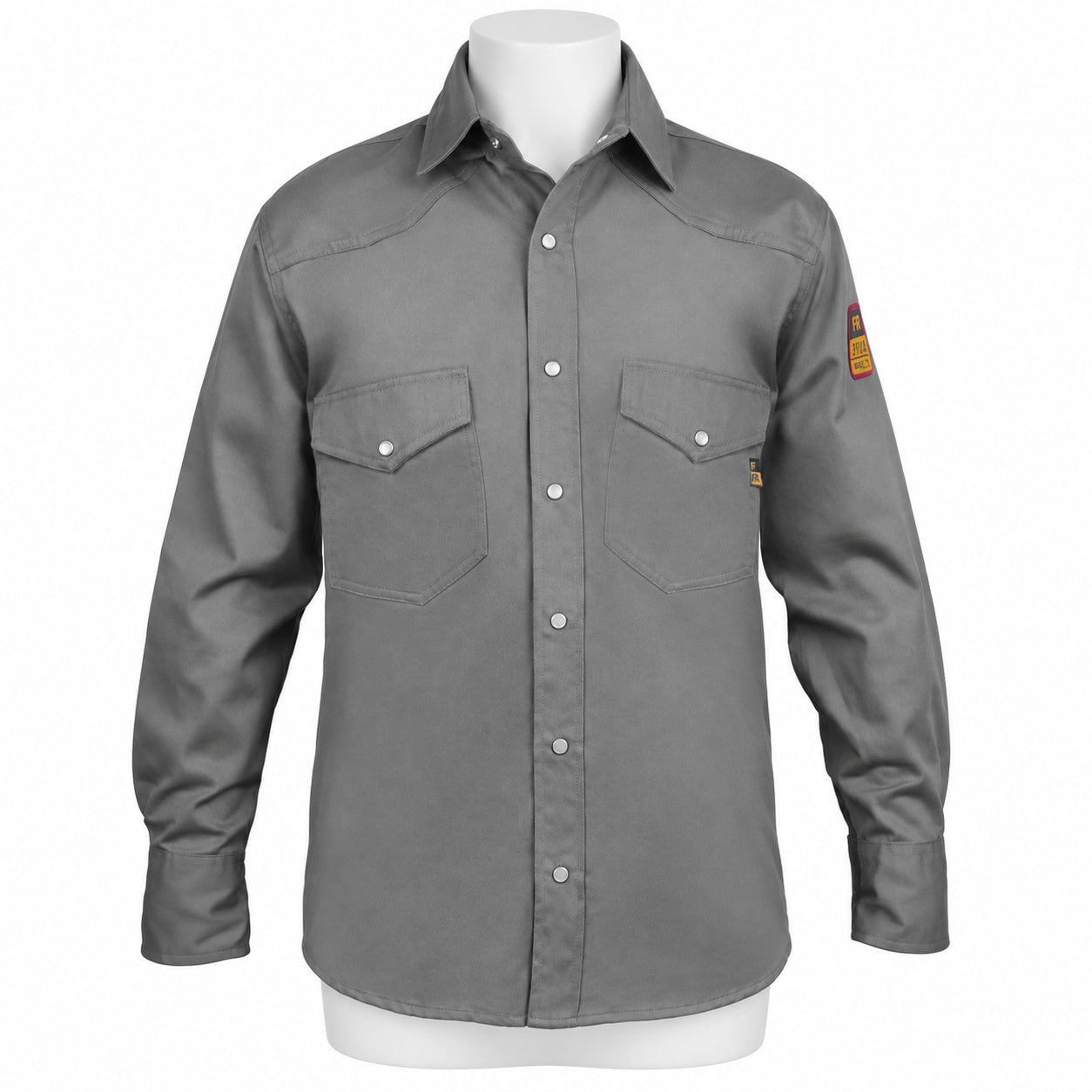
Cotton-nylon blends are one option for crews who want a more durable shirt. The product listings describe the 88/12 cotton-nylon twill as durable and shrink-resistant.
Cotton vs. Cotton-Nylon: Durability and Comfort Trade-Offs
| Fabric | Weight | Arc Rating | Durability | Best For |
|---|---|---|---|---|
| 100% cotton | 7 oz | ATPV 11 cal/cm² | Good, shrinks less when mercerized | Hot climates, welders, electricians |
| 88/12 cotton-nylon | 7 oz | ATPV 12 cal/cm² | Better abrasion resistance | Crews with heavy wash cycles |
| FR denim | 7 oz | ATPV 11 cal/cm² | High, holds shape | Plant work, mixed duty |
The 88/12 cotton-nylon CAT 2 shirt outlasts straight cotton and carries a slightly higher ATPV 12. For crews replacing shirts every season, that durability pays back. If you want a deeper look at matching shirts to specific hazards, read how to choose CAT 2 FR work shirts that meet your hazard.
Inherent vs. Treated FR: What the Label Doesn't Say Out Loud
Lightweight CAT 2 shirts are generally built from either treated or inherently flame-resistant fabrics, and the construction type affects how the protection holds up over time.
Check the product listing to confirm the fabric construction before you buy, and follow the care instructions on the label.
Custom FR Apparel Printing Without Compromising Safety Ratings
Printing on FR fabric requires care: decoration must not alter the garment's protective performance.
The practical approach is to keep prints small, avoid covering the torso, and confirm the decorator understands FR constraints. Our team handles custom FR apparel printing with methods that keep the rating intact, and we'll tell you upfront if a design won't work on FR material. That honesty matters more than a sale.
How to Care for CAT 2 FR Gear So It Keeps Its Rating
Care is where ratings quietly die, and the number that matters most is wash cycles. Treated FR fabrics lose protection gradually as the chemical finish wears down, while inherent FR fabrics hold their properties longer, but every FR garment benefits from the same discipline, and most programs never track the variable that predicts failure.
Wash-Life: How Many Cycles Before the Rating Drifts
There is no universal cycle count stamped on a CAT 2 shirt, and that is the point most guides skip. The service life depends on the fabric construction, the laundry chemistry, and the contamination load. Many industrial laundry programs set a documented retirement interval for FR shirts; follow your program's requirements and the garment's care label.
That does not make them immortal: abrasion, holes, and contamination still retire a shirt. But it changes how you budget replacement and how aggressively you need to sample-test garments from a laundry program.
- Wash in mild temperatures with mild detergent, no bleach, no softener
- Separate FR from non-FR laundry to avoid lint transfer
- Inspect for holes, thin spots, and contamination after each wash
- Retire garments with grease or chemical saturation that won't wash out
- Track wash cycles if your program requires documented service life
- Confirm whether your shirt is treated or inherent before setting a retirement interval
A common mistake is tossing FR shirts in with shop rags. Oil residue is fuel. A shirt that looks clean can still fail.
Reading the Wear Signs That Actually Matter
Visual inspection catches more failures than cycle counting alone. Look for thinning at the elbows and cuffs, frayed seams, and any area where the fabric has gone shiny from abrasion, those are the spots where a garment loses protective mass first. Contamination that will not wash out, such as cured oil or chemical saturation, is a retirement trigger regardless of cycle count because the residue can add fuel to the fabric.
Layering and Skin Comfort: What Most FR Guides Skip
Skin irritation under FR gear is real, and it usually traces to fit, seams, or trapped moisture rather than the fabric itself. Crews working hot shifts should treat the base layer as part of the system.
A breathable base layer under an FR outer shirt is a common choice for managing comfort on hot shifts. For visibility and comfort in one layer, the hi-vis pearl snap CAT 2 shirt gives crews a visible outer option that stays comfortable through a full shift.
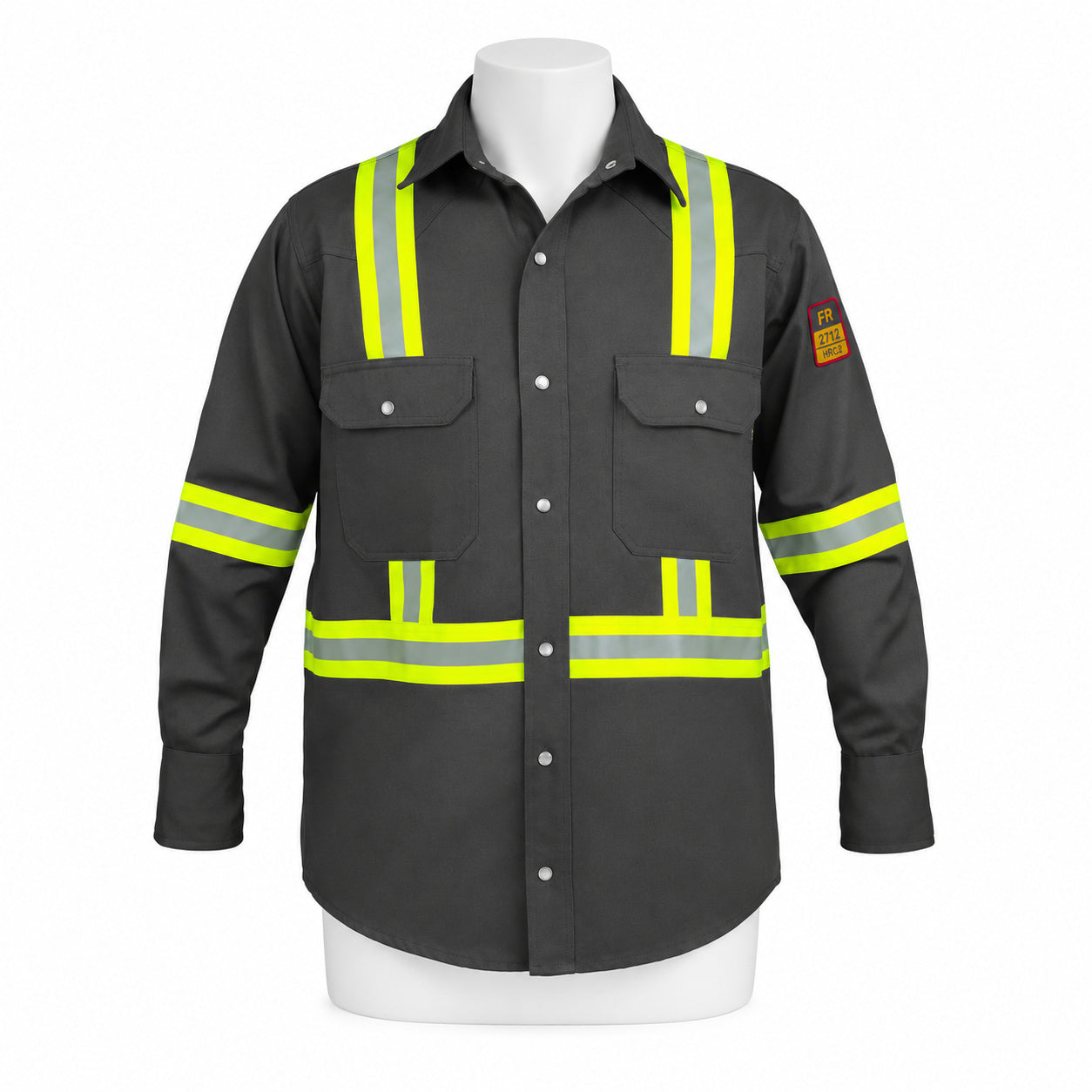
Layering for variable climates means planning for a cold morning and a hot afternoon. Start with a wicking base, add the FR shirt, and keep a second FR layer available rather than wearing one heavy garment all day.
Picking FR gear that protects without cooking your crew takes more than reading a label. The Goods ND prints and supplies FR workwear with in-house equipment, thorough quality control checks, and fast turnaround times. We handle small orders and bulk runs alike, with discounts on major orders reviewed case by case. Get started with The Goods ND and outfit your crew in gear that holds its rating and its comfort.
Frequently Asked Questions
What does CAT 2 mean for flame-resistant clothing?
CAT 2 is a hazard risk category for FR clothing that must withstand an arc flash exposure of 8 to 25 calories per square centimeter. A CAT 2 shirt carries an ATPV rating in that range, so it protects against a higher energy exposure than CAT 1 gear. Every CAT 2 FR shirt should also be NFPA 2112 compliant for flash fire protection and ASTM F1506 compliant for arc flash. Check the garment label for both the ATPV number and the CAT level before you buy.
Are lightweight CAT 2 FR shirts as protective as heavy-duty options?
Yes, as long as the ATPV rating meets your hazard level. Protection comes from the fabric's arc rating, not its weight. A 7 oz cotton shirt rated ATPV 11 cal/cm² protects the same as a heavier shirt with the same rating, it just breathes better. Lightweight CAT 2 FR shirts are a good fit for outdoor crews in hot weather because they reduce heat stress while still meeting NFPA 2112. Confirm the ATPV number on the label matches your site's hazard assessment.
Can you customize lightweight CAT 2 FR shirts with company logos?
Yes. Custom FR apparel printing is possible on CAT 2 shirts, but the method matters. The print must not melt or compromise the fabric's flame resistance, so plastisol and other standard inks are not suitable. Ask your printer to confirm the decoration will not change the garment's NFPA 2112 or ASTM F1506 rating. Request a sample print on an FR swatch before committing a full crew order, and get the printer's confirmation in writing.
How do I choose the right FR shirt for hot weather work?
Start with fabric weight: 7 oz cotton or cotton-nylon twill is light enough to stay comfortable through a full shift. Look for breathable weaves, moisture-wicking finishes, and features like action back pleats that let air move when you reach and lift. Light colors reflect heat better than dark ones. If your crew works in variable climates, size up so you can layer a base layer underneath in the morning and strip down by midday. Always confirm the CAT 2 rating and ATPV before ordering.
