

7 Ways to Design Custom Shirts for Your Group
Table of Contents
- 1. Start With Your Group's Purpose and Theme
- 2. Choose a Central Design Element and Logo
- 3. Select Your Color Palette for Maximum Impact
- 4. Group T-Shirt Design Ideas for Different Occasions
- 5. Custom Shirt Design Tips for Text and Graphic Placement
- 6. Pick the Right Custom T-Shirt Printing Method
- 7. Understand Bulk Custom Shirt Pricing and Fit Selection
- Frequently Asked Questions
Last Updated: October 10, 2026
1. Start With Your Group's Purpose and Theme
The foundation of any successful effort to design custom shirts starts with clarity about your group's purpose. Before picking colors or fonts, ask: What is this group about? Are these shirts for a work crew, a charity event, a family reunion, or a community organization? The answer shapes every design decision that follows.
Your group's purpose becomes the backbone of your design. A construction crew needs professionalism and safety. A church group leans toward inspirational messaging. A sports team needs visual energy. The strongest custom shirt designs start with a clear mission statement, even if it's just one sentence.
Once you've defined your purpose, narrow down your theme, the visual or conceptual direction that ties everything together. A theme might be a year ("Class of 2026"), a location ("Fargo Community Cleanup"), a value ("Safety First"), or a shared identity ("We Build Together"). Your theme keeps your team aligned and prevents the design from becoming a jumbled collection of random elements.
2. Choose a Central Design Element and Logo
A strong custom shirt design has one clear focal point: your group's logo, a symbol that represents your cause, or a graphic that communicates your identity. Trying to fit too many ideas onto one shirt creates visual noise that nobody remembers.
If your group has an existing logo, use it as your anchor. If not, create a simple one, a single icon, bold word treatment, or geometric shape can be more powerful than an elaborate illustration. Remember that fine details disappear in the printing process; design for fabric, not screens.
Your logo needs to stand out against your chosen shirt color. A light logo on a light shirt becomes invisible; a dark logo on a dark shirt does the same. Test your design element against multiple shirt colors before committing to printing.
Your central design element should occupy about 20-40% of the shirt's front surface. Smaller and it disappears; larger and it overwhelms the wearer.
3. Select Your Color Palette for Maximum Impact
Too many colors create visual chaos. A smart color palette has a clear hierarchy: a dominant color, a secondary color, and an optional accent color. Most successful custom shirts use two to three colors maximum.
Your dominant color is the shirt color itself. Dark colors (black, navy, charcoal) project authority for professional crews. Bright colors (red, royal blue, lime green) grab attention for events and sports teams. Neutral colors (gray, white) feel clean and versatile.
Your secondary color is typically your logo or main graphic. This must contrast sharply with your shirt color for readability from a distance. Dark shirt = light graphic; light shirt = dark graphic.
An optional accent color (stripe, small graphic, or contrasting text) adds polish but should remain subtle and support your main design.
If your organization already uses specific colors in your logo or marketing materials, carry those into your custom shirts to reinforce identity.
For work crews or outdoor groups, a mid-tone color balances visibility and practicality, lighter colors show stains; darker colors fade in sunlight.
4. Group T-Shirt Design Ideas for Different Occasions
Different occasions call for different design approaches. Understanding what works for your specific situation saves you from designing something that misses the mark.
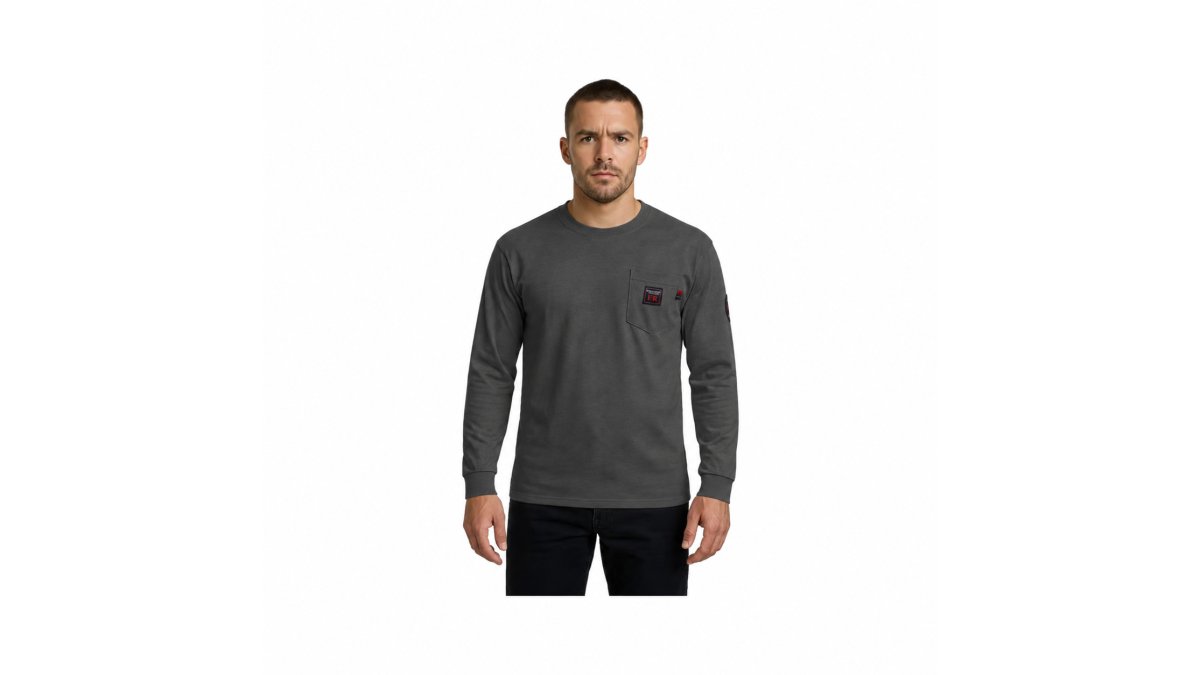
Work Crews and Trade Teams: Include your company name, logo, and crew specialty. Keep the design clean and readable with no decorative flourishes. The Men's Customizable FR Long Sleeve Shirt is built for work environments where durability and professional appearance matter, starting at $32.47.

Community Events and Fundraisers: Include the event name, date, and a graphic that captures the cause. Bright colors work well. Keep text minimal and focus on visual identity.
Sports Teams and Recreation Groups: Use bold graphics and team colors with the team name prominent. Matching shirts create instant team cohesion.
Church and Faith Organizations: Feature inspirational messaging with your organization's name. A simple cross, meaningful symbol, or short verse works well. Keep the design welcoming rather than preachy.
Family Reunions and Personal Gatherings: Include the family name, year, and a graphic, photo, symbol, or something humorous. The Customizable T-Shirt options let you upload your own photo, starting at $17.00 for the Gildan Soft Style.
School Groups and Clubs: Include the club name, school, and a graphic that represents your mission. Add a year to mark the cohort and reflect your group's personality.
5. Custom Shirt Design Tips for Text and Graphic Placement
Where you place text and graphics on your shirt matters as much as what you put there. Poor placement makes even a good design look amateurish.
Front Placement: Your main logo should sit in the upper-middle area where eyes naturally focus. Position text below or beside your graphic, not overlapping. Avoid large text at the bottom, it gets hidden when someone sits down.
Back Placement: Use the back for secondary information like team rosters, event details, or a larger logo. Use larger fonts for distance readability.
Sleeve Placement: Small logos or text add visual interest. Keep designs simple, the curved surface distorts complex graphics.
Pocket Area: A small logo or text on a chest pocket works well for professional crews without competing with larger front graphics.
Men's Customizable FR Long Sleeve Shirt →
Text Readability: Use bold, clear fonts. Thin, decorative fonts become illegible on fabric. Sans-serif fonts (Arial, Helvetica) are more readable than serif fonts.
Contrast for Visibility: Text must contrast sharply with the background. Dark shirt = light text; light shirt = dark text. This is a readability requirement, not a preference.
Spacing and Breathing Room: Leave white space around design elements. If elements are touching, they're too close.
Sizing for Different Shirt Sizes: Design with your smallest and largest sizes in mind. Test artwork across the full size range before production.
6. Pick the Right Custom T-Shirt Printing Method
The printing method you choose affects how your design looks, feels, and lasts. Different methods suit different designs and budgets.
Screen Printing: The traditional method for bulk orders. Uses separate screens for each color, producing vibrant, durable results for solid, bold graphics. Higher setup cost makes it economical for larger orders. Each color requires a separate screen, limiting cost-effective color options.
Direct-to-Garment (DTG) Printing: Applies ink directly to fabric, excelling at detailed, multi-color, and photographic designs. No setup cost makes it ideal for small orders. Produces soft, breathable prints. Less economical for very large bulk orders.
Heat Transfer Printing: Prints design onto transfer material, then applies heat and pressure to the shirt. Works well for complex, multi-color, and photographic designs. Economical for small to medium orders. Prints can feel stiff; durability depends on proper application.
Sublimation Printing: Heat transfers dye directly into synthetic fabrics, creating vibrant, long-lasting prints. Excellent for all-over or complex designs. Works primarily on polyester or poly-blend, not 100% cotton.
Embroidery: Stitches your design directly onto the shirt, adding a premium feel. Durable and professional for logos or names. More expensive per shirt than printing, better for smaller orders or accent details. The Men's Customizable FR Long Sleeve Shirts include custom logo embroidery, starting at $32.47.
Simple one or two-color designs on large orders favor screen printing. Complex, colorful designs or small orders favor DTG or heat transfer. Professional crew uniforms often benefit from embroidery.
| Printing Method | Best For | Order Size | Color Limit | Cost Per Shirt |
|---|---|---|---|---|
| Screen Printing | Bold, solid graphics | Large (50+) | 1-4 colors | Lower at scale |
| DTG Printing | Detailed, multi-color designs | Any size | Unlimited | Consistent |
| Heat Transfer | Photo-realistic images | Small to medium | Unlimited | Moderate |
| Sublimation | All-over vibrant prints | Any size | Unlimited | Moderate |
| Embroidery | Professional logos, names | Small to medium | Unlimited | Higher per shirt |
7. Understand Bulk Custom Shirt Pricing and Fit Selection
Pricing for custom shirts depends on several factors: the base shirt cost, the printing method, the complexity of your design, and your order quantity. Understanding these variables helps you budget realistically and avoid surprises.
Base Shirt Cost: Different shirt styles and fabrics have different base prices. The Goods ND offers customizable options starting at $17.00 for a Gildan Soft Style, $20.00 for Bella+Canvas, and $25.00 for a Pro Club Heavy Wide Tee.

Printing Setup and Design Complexity: Screen printing involves a setup fee per color, amortized across your order. DTG and heat transfer have minimal setup costs, ideal for small or highly customized orders. Complex designs with many colors or fine details may incur additional fees.
Order Quantity Discounts: The Goods ND offers discounts on major orders upon review. Larger orders typically have lower per-unit costs because setup fees and overhead get spread across more shirts. An order of 50 shirts costs less per unit than an order of 10.
Fit and Size Selection: Custom shirts only work if they fit your group properly. Sizing varies significantly between brands and styles. A Bella+Canvas shirt fits differently than a Gildan shirt. Men's and women's cuts aren't interchangeable.
Consider your group's diversity. If your group includes people across a wide size range, you need options from XS to 3XL or larger. Some printers limit available sizes, which can exclude people from your group.
Quality Control: The cheapest shirt isn't always the best value. A low-cost base shirt might pill, fade, or shrink unpredictably. A mid-range shirt often provides better durability and appearance.
Hidden Costs to Watch: Some printers add art fees, file preparation charges, or rush fees that aren't listed upfront. The Goods ND provides transparent pricing with no surprise setup fees or art charges tacked on at the end. Confirm what's included in your quoted price before committing.
The process to design custom shirts for your group is straightforward when you work through it methodically.
The real challenge isn't the design itself, it's making sure your final product actually represents your group the way you intended. Whether you're outfitting a work crew, organizing a community event, or creating something personal for a family gathering, we handle the technical details so your design comes out exactly as you envisioned it. Shop now and get started on your custom shirt project today.
Frequently Asked Questions
How do you design custom shirts for a group?
Start by defining your group's purpose and theme, then select a central design element like a logo or graphic. Choose your color palette for readability and visual appeal, decide on text placement and sizing, pick your garment style and material, select your printing method based on design complexity and durability needs, and finally review your design proof before ordering. Most groups benefit from working with a printer who can guide them through each step and handle quality control checks.
What are the best custom T-shirt printing methods for group orders?
The most common custom T-shirt printing methods include screen printing for bold, durable designs on large orders; direct-to-garment (DTF) printing for detailed, full-color designs on smaller quantities; heat transfer for simple designs with quick turnaround; and embroidery for professional logos on work uniforms. Screen printing offers the best value for bulk orders over 50 pieces. Choose based on your design complexity, order size, and how often the shirts will be washed.
How can you keep bulk custom shirt pricing affordable for a group?
Order in larger quantities to reduce per-shirt costs, most printers offer tiered pricing that drops significantly at 25, 50, and 100+ piece orders. Choose simpler designs with fewer colors to lower printing costs. Select standard garment styles and colors rather than premium options. Plan ahead to avoid rush fees. Ask your printer about volume discounts on major orders; The Goods ND offers discounts upon review for bulk orders. Compare pricing upfront including any setup or art fees to avoid surprises at checkout.
What shirt materials and fit options work best for group orders?
For general group events, 100% cotton or cotton-blend tees offer comfort and durability. Consider your group's demographics when selecting fit, offer both men's and women's styles if your group is mixed-gender. For work crews or specialized groups, look for options like FR (flame-resistant) long-sleeve shirts for safety-critical environments. Heavier-weight fabrics (like Pro Club Heavy Wide Tees at 25 dollars) last longer through multiple washes. Always order sample sizes first to check fit and quality before committing to a full group order.