

Custom Apparel Bulk Order Discounts: 2026 Guide
Table of Contents
- How Bulk Order Discounts Work for Custom Apparel
- Bulk Custom T-Shirt Pricing: Breaking Down Unit Costs
- Minimum Order Quantity for Custom Shirts Explained
- DTF vs. Screen Printing for Bulk Orders: Cost and Quality Trade-Offs
- How to Order Custom Shirts in Bulk: Step-by-Step Process
- Hidden Fees and Order Terms to Watch
- Smart Ordering: Avoiding Common Mistakes
- Frequently Asked Questions
Last Updated: October 16, 2026
How Bulk Order Discounts Work for Custom Apparel
When you order custom apparel in volume, the unit cost drops significantly. This is how bulk order discounts function: manufacturers spread setup costs, design fees, equipment calibration, and quality checks across a larger quantity, making each piece cheaper to produce.
The discount structure typically works in tiers: hit a minimum quantity threshold and your unit price drops to tier one; hit a higher quantity and you move to tier two with a better rate. This reflects real operational efficiencies, screen printing 10 shirts requires nearly the same setup time as printing 50, while DTF printing scales differently than embroidery.
Most bulk order discounts apply automatically once you meet quantity thresholds; some suppliers require a quote request. Know your exact needs before shopping around so you compare apples to apples.
Bulk Custom T-Shirt Pricing: Breaking Down Unit Costs
The unit cost for bulk custom t-shirts depends on four factors: base garment price, printing method, design complexity, and order quantity.
Base garment cost varies by quality and style. Premium options like Bella+Canvas, Gildan Soft Style, or Pro Club Heavy tees cost more upfront but deliver better durability and feel. The Customizable T-Shirt, Bella+Canvas starts at $20 per shirt, while the Customizable T-Shirt, Gildan Soft Style begins at $17, a $300 to $400 difference on a 100-shirt order.


Printing method affects per-unit pricing significantly. Screen printing requires screens and setup but becomes economical at volume. DTF printing has lower setup costs and works better for small orders or complex, multi-color designs. Embroidery adds cost but delivers a premium look, essential for branded workwear like the Men's Customizable FR Long Sleeve Shirt at $32.47 per unit.

Design complexity matters too. A single-color front logo costs less than a full-back print or multi-color gradient, and placement changes pricing. The more intricate the design, the higher the per-unit cost, though this premium shrinks as quantity increases.
Order quantity is the lever that moves pricing most dramatically.
| Order Quantity | Typical Unit Cost (Screen Print) | Typical Unit Cost (DTF) |
|---|---|---|
| 10-25 shirts | $18-$25 | $15-$20 |
| 50-100 shirts | $12-$18 | $12-$16 |
| 200-500 shirts | $8-$14 | $10-$13 |
| 500+ shirts | $6-$12 | $8-$12 |
These are industry ranges; actual costs depend on garment choice, design, and vendor. The Goods ND offers competitive pricing with transparent quotes and no surprise fees.
Minimum Order Quantity for Custom Shirts Explained
Most custom apparel vendors impose a minimum order quantity (MOQ), the smallest number of shirts you can order before pricing applies.
DTF printing requires minimal setup, allowing for smaller orders, which is a game-changer for small organizations, event planners, and individuals who can't justify 50-unit commitments.
The Goods ND works with organizations of all sizes and doesn't turn away small orders, a church group in Bismarck needing 30 shirts, or a solo entrepreneur wanting 5 personalized tees. This flexibility removes the artificial barrier that forces people to order more than they need just to meet a vendor's minimum.
That said, if you're planning a bulk order anyway, hitting higher minimums unlocks better per-unit pricing. The question isn't "what's the smallest order we can place?" It's "what quantity makes financial sense for our budget and need?"
DTF vs. Screen Printing for Bulk Orders: Cost and Quality Trade-Offs
DTF (direct-to-garment) and screen printing are the two dominant methods for bulk custom apparel, with different cost profiles, quality outcomes, and best-use cases.
Screen printing involves creating a mesh screen for each color, then pushing ink through it onto the garment. Setup is labor-intensive but one-time; once screens exist, printing additional units is fast and cheap. It excels at large orders (200+ units) of simple designs (1-3 colors), and the ink sits on top of the fabric for a durable, tactile finish.
The trade-off: screen printing struggles with photo-realistic designs or gradients, limiting you to solid colors or simple separations. Setup costs are high.
DTF printing uses a specialized printer to apply a design directly onto the garment, similar to inkjet printing. There's no screen creation and no color limitations, you can print photorealistic images, complex gradients, and multi-color designs on a single shirt. DTF shines for small-to-medium orders (10-200 units) and intricate detail.
The trade-off: DTF ink sits on the fabric surface and can feel slightly stiff, and per-unit costs are higher than screen printing at very large volumes (500+).
For bulk orders, the decision comes down to design complexity and quantity. Simple logo, 300+ shirts? Screen printing wins on cost. Complex photo design, 50 shirts? DTF is your answer.
The Goods ND uses both techniques. We recommend based on your specific design and order size, not what's cheapest for us. That's the difference between a vendor and a partner.
How to Order Custom Shirts in Bulk: Step-by-Step Process
Ordering custom shirts in bulk involves five key steps that prevent costly mistakes.
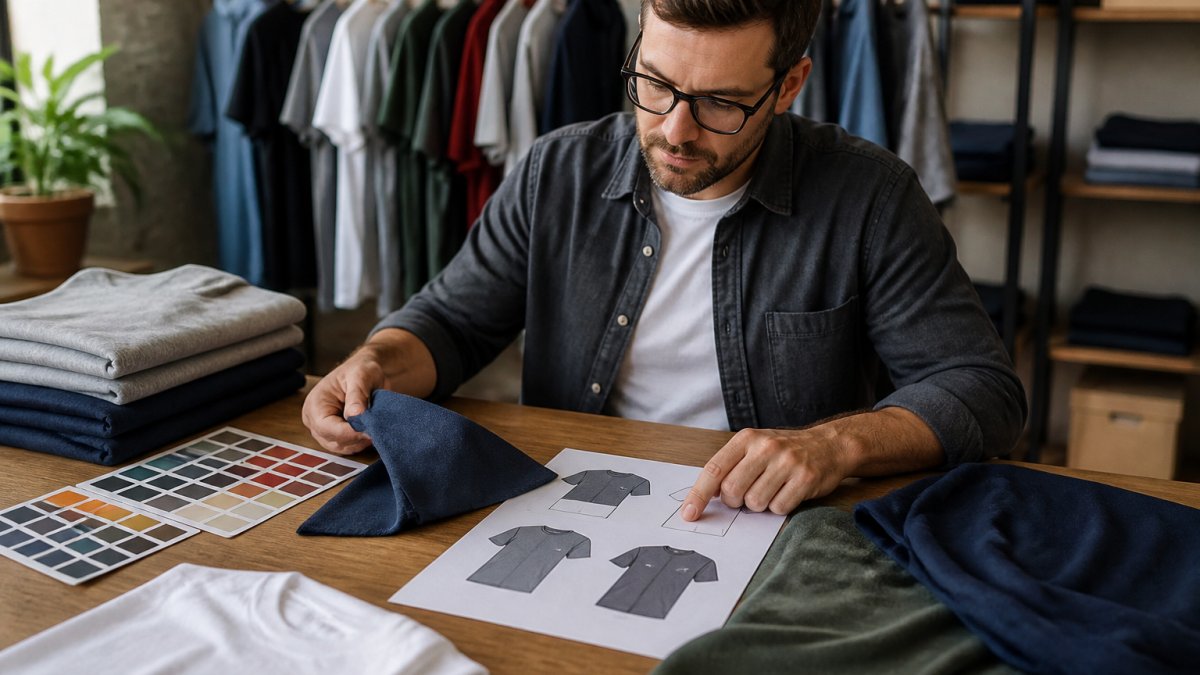
Step 1: Define Your Design and Garment Before contacting a vendor, finalize your design and garment: number of colors, placement (chest, back, sleeve), fabric type, and the colors and sizes you need.
Have a final design file ready. Vague briefs like "something patriotic" cause delays, while specific briefs like "our company logo in white, centered on the chest, on navy Gildan 50/50 blend tees" move the process forward.
Step 2: Request a Quote Contact your vendor with your specifications: design file (or clear description), garment choice, order quantity, size breakdown, and deadline.
A good quote includes per-unit cost, total cost, setup fees, turnaround time, and terms like rush fees, reorder discounts, and payment methods. Compare quotes side by side and watch for hidden fees, art charges, shipping, and setup costs.
Step 3: Approve Design and Place Order Once you approve the quote, you'll place the order. Most vendors require a deposit or full payment upfront. Submit your final design file. Confirm size quantities. Agree on timeline.
Men's Customizable FR Long Sleeve Shirt →
This is your last chance to catch mistakes. Double-check spelling, logo placement, and color accuracy to prevent reprints and wasted inventory.
Step 4: Production and Quality Control Your order enters production. Lead time varies by method and vendor: screen printing typically takes 7-14 business days, DTF printing 5-10 days.
Step 5: Delivery and Inspection Your order arrives. Inspect immediately. Check for color accuracy, print quality, sizing, and damage. If something's wrong, contact your vendor within 48 hours. Most reputable vendors will address issues, reprints, refunds, or credits.
Common mistakes to avoid:
- Underestimating sizes. Always order a few extra mediums and larges.
- Choosing the wrong garment. Cheaper isn't always better. A $5 base tee that shrinks or fades ruins your entire order.
- Rushing the design phase. Spend time here. A perfect design at day 10 beats a mediocre one at day 1.
- Ignoring turnaround time. Don't assume rush production is available. Confirm timelines upfront.
Hidden Fees and Order Terms to Watch
Not all vendors are transparent about pricing. Understanding common hidden fees protects your budget.
Setup and art fees are the most common surprise. Ask upfront: is setup included or separate? Does it apply per design or per color?
Rush fees apply when you need faster turnaround. Confirm standard lead time and rush costs before committing.
Shipping costs are often quoted separately. Some vendors offer free shipping over a certain order value; others charge flat rates. Factor this into your total cost comparison.
Reorder fees apply if you order the same design again later. Some vendors charge a reduced setup fee for reorders (because screens already exist). Others charge full setup again. If you anticipate reordering, clarify this policy upfront. It affects long-term cost.
Minimums for certain options are sneaky. "Free embroidery on orders over 50 units" means you pay for embroidery on smaller orders, and "bulk discounts start at 100 units" means 50-unit orders cost more per unit than you might expect.
Payment terms matter too. Confirm before ordering.
The Goods ND publishes pricing upfront. No hidden fees. No surprise setup charges. You see the total cost before committing.
Smart Ordering: Avoiding Common Mistakes
Smart bulk ordering means thinking strategically about quantity, timing, and reordering.
Mistake 1: Ordering too many of one size. Teams often skew toward mediums and larges and underestimate XXL demand, leaving leftover smalls and stockouts of larger sizes. Survey your group's sizes beforehand, then order 10% extra in your most common sizes and 5% extra in outliers.
Mistake 2: Choosing low-cost garments and regretting it.
Mistake 3: Not planning for reorders. If you're ordering for an ongoing organization (sports team, company, church group), you'll reorder. Order slightly more the first time than you think you need; reorders at the same quantity usually cost less per unit because setup is minimal.
Mistake 4: Ignoring turnaround time. A 10-business-day lead time means your order might not arrive for 14 calendar days. If your event is in 10 days, you're cutting it close. Always add a buffer; rush production exists but costs more.
Mistake 5: Skipping quality control before delivery. Once you receive the order, you have a narrow window to report issues. Inspect immediately. Check print quality, color accuracy, sizing, and damage. Don't discover problems a week later when the event is approaching.
Mistake 6: Not considering sustainability or ethical sourcing. Bulk apparel orders have environmental impact. Choosing vendors who prioritize sustainable materials or ethical labor practices aligns your order with your values, especially for organizations with public-facing missions.
The best bulk orders are planned, not rushed. Know your quantities, timeline, and budget, then find a vendor who delivers without surprises.
Ordering custom apparel in bulk is straightforward when you understand the mechanics of discounts, printing methods, and vendor terms. The Goods ND specializes in high-quality custom apparel printing with competitive pricing, fast turnaround times, and thorough quality control checks. Shop now and get a quote for your next bulk order, no hidden fees, no surprises, just custom apparel built to last.
Frequently Asked Questions
How do bulk order discounts work for custom apparel?
Bulk order discounts reduce your per-unit cost as you increase order quantity. Most custom apparel suppliers, including The Goods ND, apply tiered pricing where larger orders unlock lower prices per shirt. For example, ordering 50 custom t-shirts costs more per unit than ordering 200. Discounts typically apply to the garment base price and may vary depending on your printing method (DTF, screen printing, embroidery) and customization complexity. The brand reviews major orders individually to provide competitive pricing.
What is the minimum order quantity for custom shirts?
The Goods ND accepts orders of any size, there is no minimum order quantity requirement. Whether you need 1 shirt or 500, you can place an order. However, bulk custom t-shirt pricing becomes more attractive at higher quantities. Small orders (1-10 shirts) will have a higher per-unit cost compared to bulk orders of 50+ shirts. This flexibility makes The Goods ND suitable for small church groups, family gatherings, and large corporate events alike.
Is DTF or screen printing cheaper for bulk orders?
DTF (direct-to-film) and screen printing have different cost structures for bulk orders. Screen printing typically offers lower per-unit costs at higher volumes (100+ shirts) because setup costs are spread across many units. DTF printing works well for smaller bulk orders and complex designs with many colors, as it has lower setup fees. The best choice depends on your design complexity, order size, and timeline. The Goods ND offers both methods, so discuss your specific project to determine which saves you money.
How can I reduce the cost of custom apparel without lowering quality?
Order a larger quantity to reduce per-shirt costs through bulk discounts. Simplify your design, fewer colors or less detail lowers printing costs. Choose standard garment options (like The Goods ND's Men's Port & Co Tees at $20 or Customizable T-Shirts starting at $17) rather than premium blanks. Plan ahead to avoid rush fees. Request a quote before ordering to understand total costs and identify where you can adjust quantity or design to fit your budget while maintaining quality.